vendredi 24 juin 2016

Morning in Dinan, "La médiévale"

Much of the landscape from Rennes up towards the medieval enclave of Dinan is wild and remote, with only the occasional farm that can be spotted from across acres of lush green fields. The morning is resigned to cool, leaden weather that although cumbersome, complements the rusticity of this small, feudal town. As we drive into what looks still like a fortress from the "Moyen Âge," with the oldest house dating back to 1494, my heart leaps at the thought that I am even lucky enough to be here.


Each day I am in Brittany I think about how beautifully my work at school has come together with my journey to this region. This past year, my French studies have revolved around the Arthurian legend and medieval literature, much of which is deeply rooted in Brittany. To be in this place then, and to see before my eyes what I have imagined in my mind for so long is extraordinary.

There are reminders everywhere of the magic of this land, even if they are as subtle as a blossoming honeysuckle bush that crawls up an ancient, but enduring granite wall. It is gentle and fragrant, making me think of one of my favorite lais by Marie de France, Le Chèvrefeuille (honeysuckle in French, literally translating to "Goat's ear"). It comes from the myth of the tragic lovers Tristan and Iseut, a classic Breton story that every Breton knows.
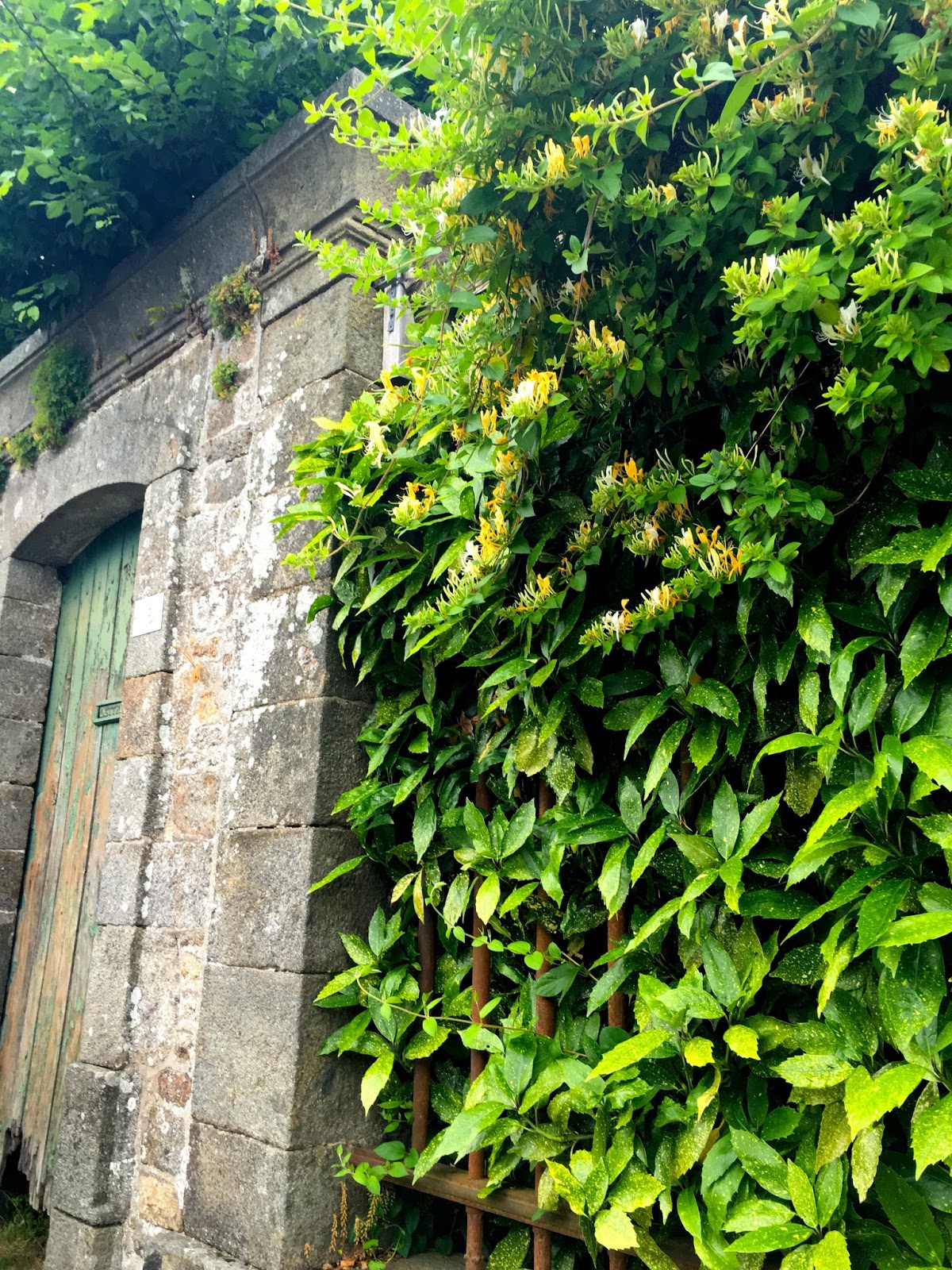

Tristan is deeply in love with Iseut, who is his uncle, King Marc's, wife and queen. Tristan is therefore banished from Cornwall. Yet in a plan to see his beloved again, Tristan hides in the woods through which Iseut travels, and taking a hazel branch (le coudrier) covered in delicate honeysuckles (le chèvrefeuille), he carves his name. Once Iseut sees this, she knows that Tristan is closeby, always thinking of her and unable to live without her. Their love forever remains a secret, bound by the limits of their fate that dooms them to be parted. The two thus resemble the honeysuckle, which clings to the hazel branch; Only together, wound with one another can they survive. Separated, they will die.

Leaning off the jagged stones of this old fortress, it is impossible not to feel the thousand years of history beneath my palms. Even though cars can be seen driving by below, I close my eyes for just a second and imagine the cobblestones resounding the journeys of Les Chevaliers de la Table ronde.


Dinan has a small port that lies on La Rance, a river that flows into La Manche (The English Channel) as it reaches the northern coast at Dinard and St. Malo.
  
There is no shortage of regional products here, especially sparkling cider. Shopkeepers with storefronts such as these smile as we look into the windows at the endless cider racks of every strength ranging from "doux" to "brut." 

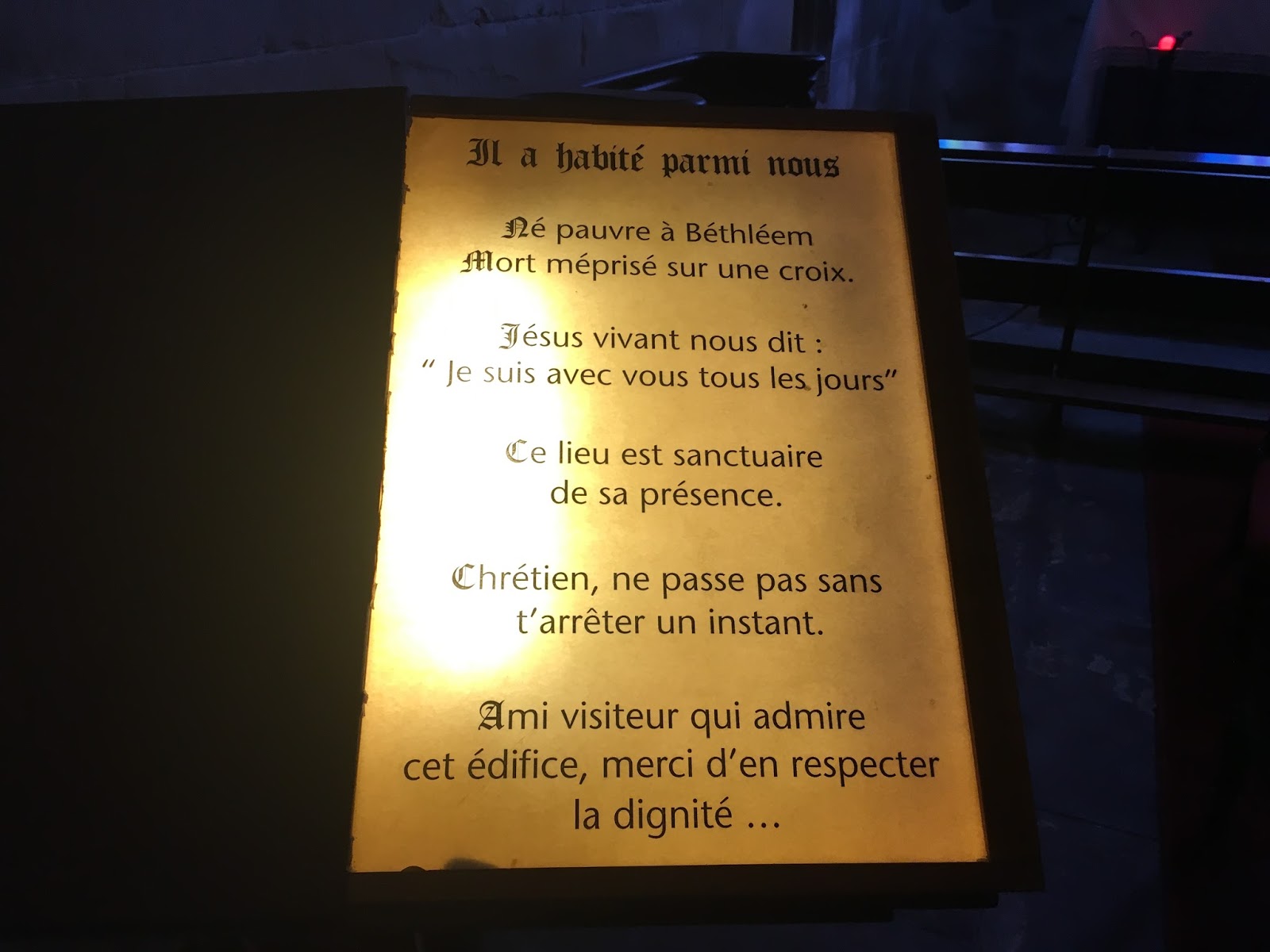
One of the most memorable places in Dinan though is La basilique Saint-Sauveur. This church holds within a concrete cenotaph the heart of a chevalier, Bertrand Du Guesclin, who was a Constable of France during the Hundred Years War. It was eerily beautiful, and every bit of chatter was softly extinguished the moment we lifted our eyes to the ceilings that mimicked heaven and felt the cool, incense-filled air touch our faces.   


It is remarkable that in France, religious orthodoxy is intensely preserved. I have been struck by how deeply traditional the Mass is celebrated here, and how reverence is shown without apology. It is clear that regardless of one's beliefs, a place like this is holy and quiets the heart in a way that cannot be explained. We originally walked around in one group, but we all gradually began to break off, and most spent at least a few moments alone in silence. 

The candle on the right is mine, lit for all of you that I am thinking about, who cannot be here with me. 
    
As we begin to head out, the sun burns through the thick clouds for the first time in almost a week. Though we may not yet be at the sea, you can still smell the iodine and feel the heaviness in the air, boding the presence of a not so far off ocean.


dimanche 19 juin 2016

Le Marché des Lices, on y va?

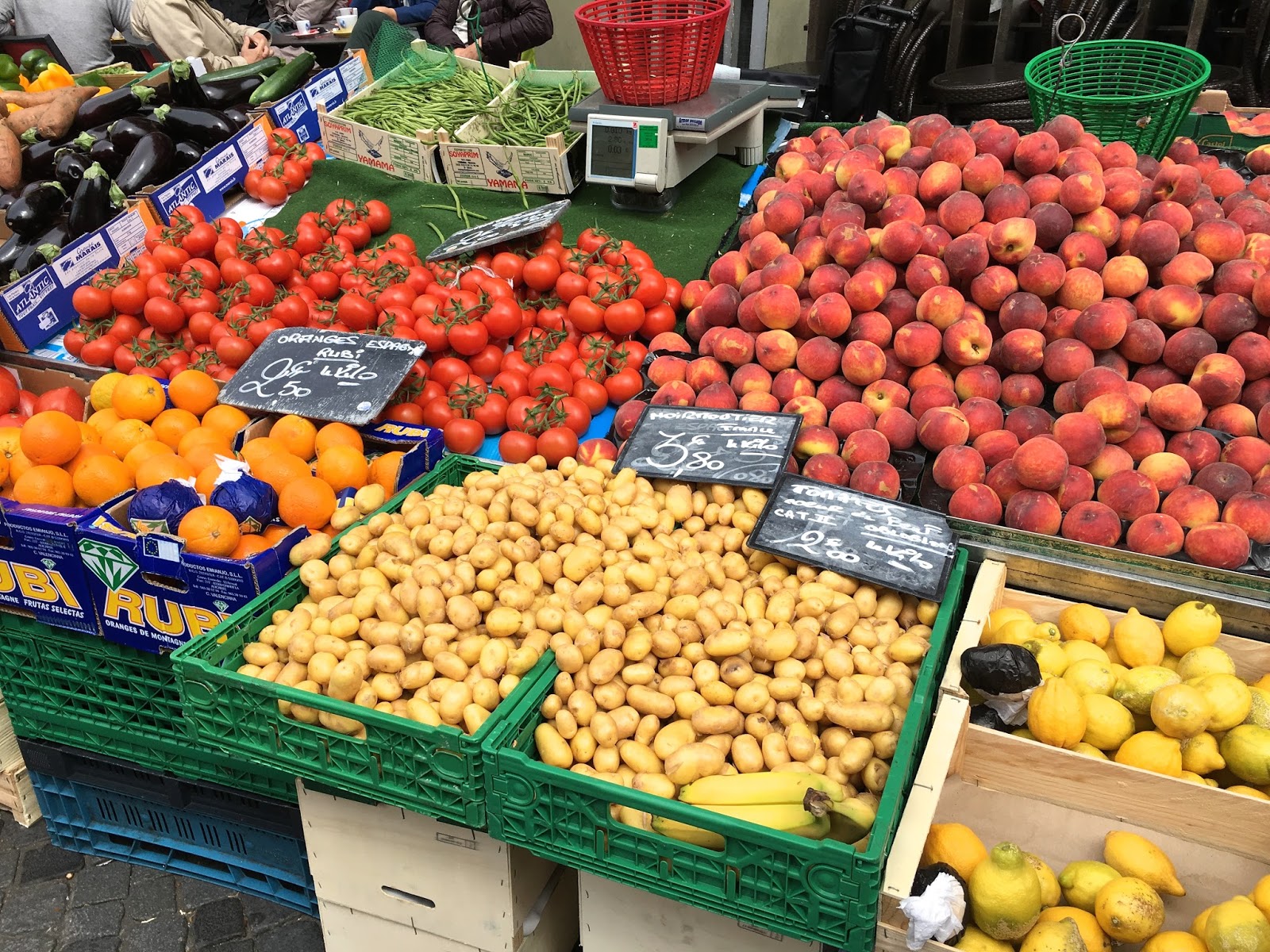
Every Saturday in Rennes, rain or shine, vendors emerge to vie for spots at the Marché des Lices. Yseult says that this is where she consistently goes to buy groceries for the week ahead. This place, however, is not at all an ordinary farmer's market. It is rather a sensory, linguistic, and emotionally charged experience that also happens to sell more flowers, food, and Breton specialities than one could imagine. The marché expands from Saint Anne in all directions down the crooked streets, the nostalgic bellow of bagpipes echoing off the cobblestones. On this overcast and windy morning, the Celtic spirit of Brittany is tangible.


The Rennais are an interesting kind. One minute, they are exercising their quintessential french aloofness, avoiding all eye contact and continuing on their mission of finding the right bunch of herbs. Yet at the next instant, they are engaging you in random conversation and strolling along as though they have known you for years.


Perhaps one of the best aspects of this market though is that anything you ask to taste, you will be given. The vendors coax you with an exuberant "Vas-y! Vas-y!"


"Kouign amann?"

This is Brittany though, and a Breton market would not be complete without "les fruits de mer."


There is also an open room off the side of the Place des Lices where musicians come and play pieces together on their flutes and violins, filling up the room quickly with those who are happy to just sit and listen.


Afterwards, we head back to unpack everything that was bought after our expedition, as well as make galettes de blé noir with ham and gruyère. Yseult teaches me to fold them a certain way, and it's a delight simply to watch her cook them. She also prepares after lunch what she calls "a real french coffee"...a strong espresso.

Alors, je suis trop contente ici.


samedi 18 juin 2016

Les premiers jours

Ça fait déjà trois jours qu'on est ici à Rennes...Alors, il faut commencer à écrire...

What better way to begin the journey to this special region then by boarding a plane right on the tarmac. This was a first for me and to be honest, it gave me more of a thrill than I expected! We may have been flying within France (from Paris to Rennes), but it felt as though we were departing into another land entirely. Now after being here in Brittany for a few days, it is clear that we in fact were.

The cab ride into Rennes, the capital of Brittany, was lively to say the least, the driver being a spirited Bretonne who proceeded to tell us in her heavy French all about how her hometown of Dinan was the best, most authentic city on the northern coast and that if we wanted to "grossir" while we were here, "il faut manger du kouign amann!" (a traditional breton recipe for a fluffy yet caramelized gâteau, or cake, made by layering dough with lots of butter and sugar.) This she felt was "la recette la plus bretonne," even more so than the celebrated caramels au beurre salé.

Right away, I have been indelibly struck by the intensity of this region and its people. If I had to choose two words for Bretagne, they would be fierté and âme, pride and soul. The people are unapologetically proud and constantly aware of being Breton, and as such are deeply, emotionally tied to this region, enmeshing it as a part of their spirit. I have already met several people in Rennes who off-hand have spoken to me in detail about the history of how Bretagne became Bretagne, and I could see in their eyes it was as if they were speaking to me about themselves. My host mother, Yseult, is no exception.

Getting off at our métro stop, Charles de Gaulle, is like stepping into what feels like an indie French movie. Not a word of English can be heard and young adults sit outside cafés smoking and throwing around french slang, or "l'argot." Yseult tells me that adults systematically keep with "la politesse" by always addressing others with a "bonjour," and leaving them with an "au revoir." She says this as she pours some of the regional speciality of "cidre" for me to try before dinner and talks to me about her home of Carnac, which lies on the southern coast of Brittany.  

Below is my room, along with Yseult's rambunctious cats, Pika and Curly. What can I say, even the cats are beautiful here.


Dinners here are a much slower, intentional process that begin around 7:30 or 8 p.m and end near 10 p.m, when the sun finally goes down for the night. Yseult and I both like to drink tea, so in the morning we sit down and drink it from bowls while having either fruit or brioche with preserves before leaving for the day. The ease of our conversations and the sweetness of her place and personality help alleviate my homesickness.


*EU laws require notice that this blog uses cookies. Be aware that in viewing this blog the server has access to location and viewer statistics and will run cookie scripts.